
We Exclusively represent buyers
NNN UPS For Sale
When we evaluate UPS single-tenant NNNs for sale, we’re not buying a brand—we’re buying a net lease backed by a payer with a proven operating history. At the end of the day, the question is simple: who’s paying, can they keep paying, and for how long. Everything else is secondary.
A well-structured UPS net investment can deliver what most investors want from a commercial real estate investment opportunity: reliable cash flow, limited expense exposure, and a tenant that’s essential to daily economic activity. That said, not all UPS NNN investment opportunities are equal, and none should be treated as automatic wins. The right outcome comes from disciplined underwriting, not optimism.
This guide walks through how we evaluate UPS NNN investment properties as a lease investment, whether the goal is passive income, a 1031 exchange, or a long-term real estate investment built around durable income.
"*" indicates required fields
Understanding the Net Lease and the NNN Advantage
A net lease shifts certain operating expenses from the owner to the tenant. In a true NNN lease, the tenant typically covers property taxes, insurance, and maintenance. For modeling purposes, that means the rent line is close to actual NOI, which is why NNNs are popular with investors seeking passive income.
For example, if base rent is $850,000 annually and the lease is properly structured, your cash flow tracks very closely to that number. That predictability is the appeal.
Here’s the thing: not every NNN lease is created equal. Some leases push roof or structural obligations back to the landlord. Others cap reimbursements or exclude paving and drainage. Those details matter, because they change whether the lease investment is truly passive.
Bottom line: the NNN label only matters if the lease language supports it.
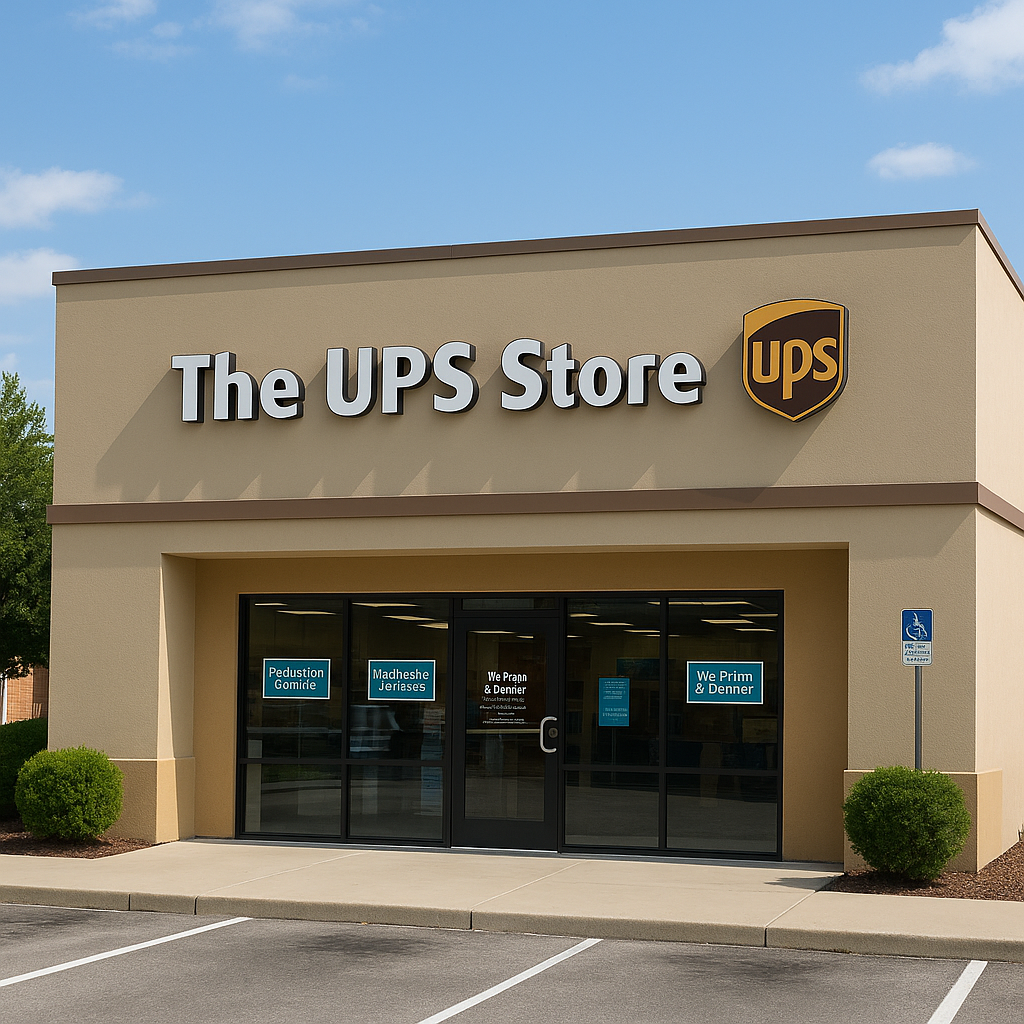
Why UPS Works in NNN Properties
UPS is commonly underwritten as one of the strongest credit tenants in the logistics space. That matters. Strong payers reduce default risk, tighten cap rate expectations, and improve financing terms.
But we don’t buy sentiment—we buy structure.
UPS facilities typically serve a defined operational role: last-mile delivery, sorting, or regional distribution. If the building is critical to service coverage, the lease tends to behave like infrastructure. That’s what supports long-term leases and renewal probability.
From a commercial real estate standpoint, UPS NNN properties are often pursued alongside other household-name tenants like Walgreens, Walmart, CVS, or Dollar General, McDonalds and AutoZone —but industrial logistics sites are different. They’re not discretionary retail. They move goods. If demand stays, the rent stays.
Takeaway: UPS earns its place among credit tenants, but the site’s function determines how durable the income really is.
Types of UPS Facilities You’ll Encounter
UPS NNN properties generally fall into three property types, each with different risk profiles:
Last-mile delivery centers. These serve dense service areas and are often embedded in population growth corridors. They tend to be operationally sticky and easier to justify long-term.
Regional hubs and sorting facilities. Large, specialized buildings with high throughput. Re-tenanting can be harder, but these sites often anchor UPS’s regional network.
Customer-facing shipping centers. Smaller footprints, sometimes closer to retail corridors. They may resemble other commercial properties like an Advance Auto Parts automotive store, Urgent Care, Family Dollar or Dollar Tree, with more flexibility but occasionally shorter long-term leases.
Each qualifies as an NNN structure, but not each carries the same downside risk. We price accordingly.
Pricing UPS NNN Properties: How Cap Rate Really Works
Most NNN properties trade on cap rate. The math is straightforward:
Cap rate = NOI ÷ purchase price
A UPS property producing $720,000 in annual NOI at a $12 million price trades at a 6.00% cap rate. That same income at $10.9 million trades closer to 6.60%.
UPS NNNs often trade at tighter cap rates because investors pay for payer reliability. Still, a higher cap rate can indicate shorter term, weaker location, or lease carve-outs. Yield alone isn’t the answer.
We evaluate:
- Remaining term on long-term leases
- Location durability and service-area density
- Lease obligations and expense exposure
- Market depth for comparable commercial real estate
Lease Terms That Matter Most
When underwriting UPS NNN properties, four clauses do most of the work:
Term and renewal options – Options belong to the tenant, so we underwrite the base term conservatively.
Rent increases – Timing and structure matter more than headline percentages.
Maintenance responsibility – Roof, structure, paving, drainage. This is where passive income can quietly erode.
Assignment rights – Who can take over the lease, and under what conditions, affects credit tenants quality.
If those four align, the lease investment tends to behave as expected.
UPS as a Tenant: Investment-Grade Characteristics
UPS is widely viewed as investment-grade, and that perception influences both pricing and lender appetite. Many lenders are more comfortable underwriting longer amortizations and lower debt spreads when credit rating risk is perceived as low.
That said, we never stop at reputation. A strong tenant with weak lease protections can underperform a slightly weaker tenant with a better contract. The lease investment stands or falls on its terms.
So we review: payment history, assignment language, renewal structure, absolute NNN lease vs NNN lease, ground lease, in a multi-tenant shopping center, and rent increases. Fixed bumps every five years are easy to underwrite. CPI-linked bumps protect purchasing power but add variability. Either can work—if priced correctly.
UPS NNN Properties and the 1031 Exchange
UPS NNNs are common 1031 exchange targets. Investors exiting active assets—multifamily, mixed-use, or owner-managed retail—often want simpler ownership and predictable cash flow that a UPS, Starbucks, Circle K or Popeyes can provide
Speed matters in a 1031, but discipline matters more. We still run due diligence, even in competitive situations. Preparation is what allows us to move fast without guessing.
Bottom line: 1031 exchanges reward clarity, not shortcuts.
Strong tenants don’t remove asset risk. Due diligence does.
For UPS NNN properties, we follow a consistent checklist:
- Lease review (term, options, rent increases, obligations)
- Physical condition (roof, structure, paving)
- Environmental review (especially industrial sites)
- Title and survey (access and easements)
We always ask the same sanity-check question: If the tenant leaves, does the building still work? If the answer is “yes, in most cases,” we proceed. If not, we reprice or pass.
Bottom Line: A High-Quality NNN Strategy When Done Right
UPS can be a high-quality tenant for investors seeking passive income, durable lease investments, and predictable real estate investment outcomes. The key is to underwrite the NNN lease, not the logo.
If the payer is reliable, the term is real, and the location holds up, the deal still pays. When one of those weakens, we tighten pricing or we don’t proceed.
That’s how disciplined investors own income backed by one of the most durable credit tenants in modern logistics—inside a structure designed for long-term ownership.
Questions about UPS NNN Properties for Sale?
Choosing Triple Net Companies, Inc. means choosing a partner with decades of exclusive buyer representation, a proven track record, and access to the best properties and financing options.
Contact us today to learn more about how we can help you achieve your investment goals.